


This was an internal R&D project that I worked on at ForwardXP.
The goal of this project was to develop a vertical slice to showcase a roguelike co-op third-person shooter set in the Rick and Morty universe.
Image (1a)
The ForwardXP art team collaborated on creating and finalizing most of the shots for this project.
My contributions:
-
Modeling and texturing the Rick Variant armor.
-
Setting up the main skeletal rig for Rick.
-
Modeling and texturing the weapon Rick is holding, Rick's workstation table (seen to the left), the shelves and props in the shelves.
-
Setting up the material/ shaders for the assets.
Other contributing artists:
-
Justin Thomas - Art Direction
-
Shane Rinehart - Modeling and texturing the garage space, setting up material shaders.
-
Samuel Wall - Art direction and scene setup
-
Jenn Cummings - Modeling and texturing props
-
Heather Tierney - Modeling and texturing props
-
Vong Pha - Modeling and texturing props
The asset seen below (Image 2a) was part of the initial R&D phase in which the team was working on capturing the artistic style from the show. Each member of the team picked their own asset to explore how we could achieve the show's art style. I was responsible for modeling, texturing and creating the material shader in engine for this building facade. This asset was textured in Substance Painter and then brought into Unreal Engine to be tested. The images 2b and 2c showcase them in the substance painter viewport.
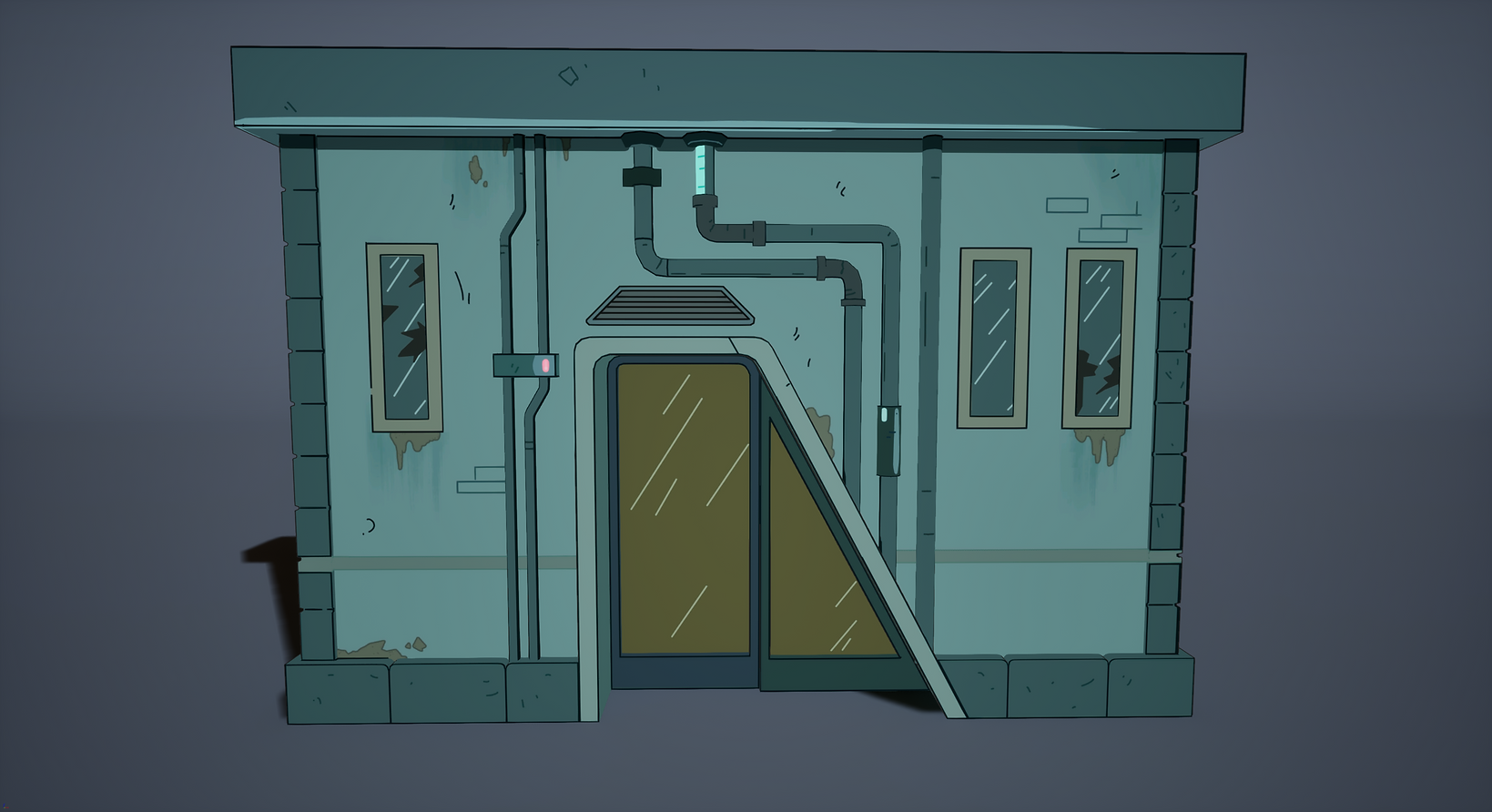
Image (2a)


Image (2b)
Image (2c)
While this workflow allowed me to get quite close to the original art style, it came with a few downsides such as:
-
A piece like this uses a 0 to 1 UV space with every detail being hand painted. This leaves no room for customizability on the fly.
-
This would also increase the number of textures used just for environment pieces such as this, which would not be optimal when this workflow is scaled up to build entire levels.
-
Hand painting every single detail would be too time consuming.
This led me to iterating different workflows to see what could be done to optimize the process for scalability.

Image (3a)

Image (3b)

Image (3c)

Image (3d)
The second iteration I explored was using a combination of simple color palettes as my primary trim sheet and custom hand painted outlines. This method used 2 sets of UVs. The first set was unwrapped for the trim sheet and the second one used a custom 0 to 1 unwrap for the hand-drawn outlines. The image 3b and 3c show that the 2 textures were overlayed and used as the base texture (Image 3d). While this gave some amount of flexibility to adjusting the colors on the fly (Video 01), it still required an extra texture sheet that would need to be hand-painted.

Video 01
Using the outlines as the mask, I was able to drive the shader to have customizable outline colors with this workflow. While it was nice to have, there was still the added downside of the requirement for an additional texture set. The clear direction from here was to use decals along with some of these trim sheets, as seen in the image below (Image 4a).
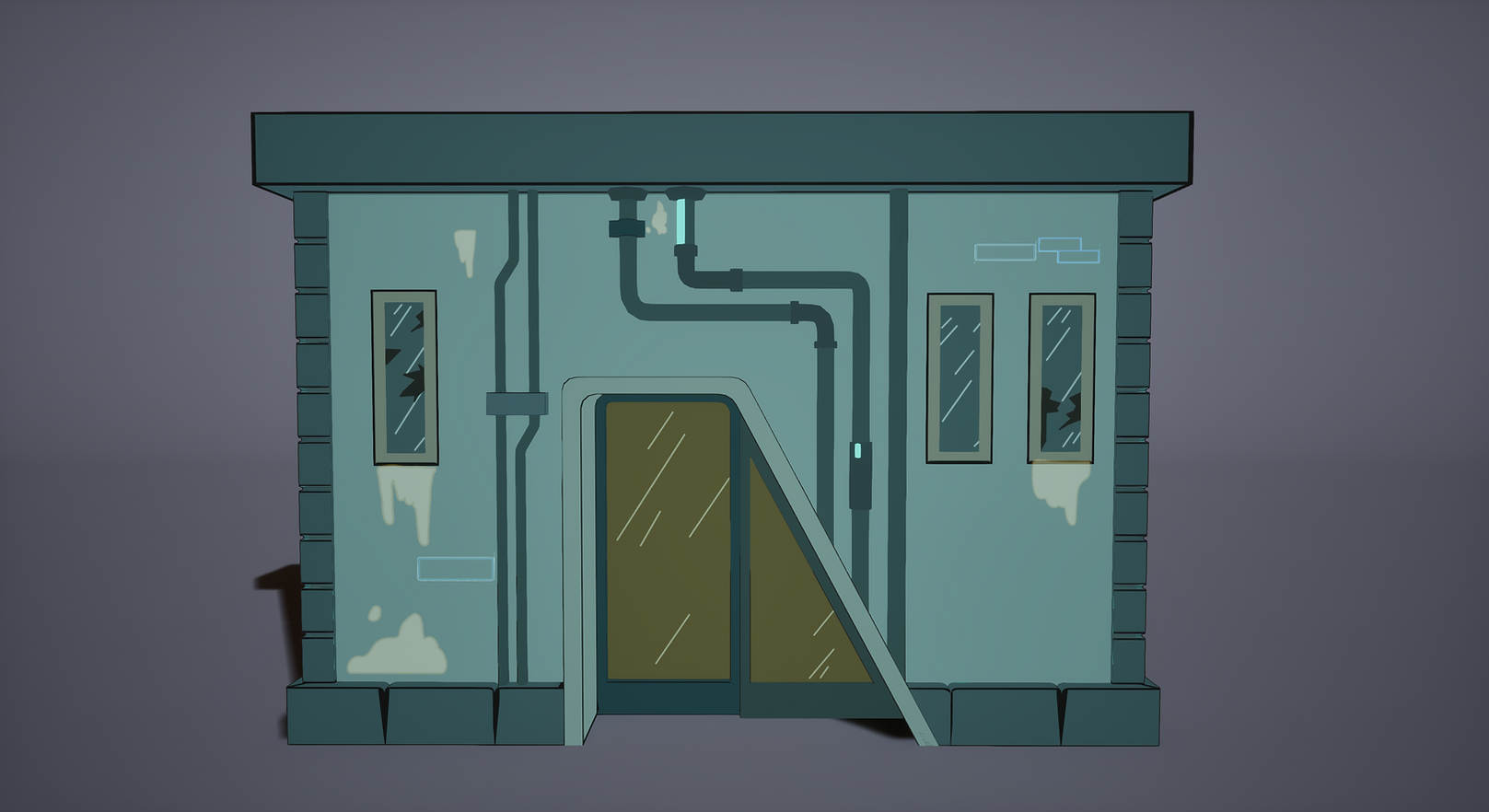
Image (4a)
The decals and the decal shader that I made were created with customizability in mind. The shader uses a similar logic of using RGB masks to customize the colors for the decals on the fly (Image 5a).


Image (5a)
Video 02
The above example shows one of the decal sets and its customizability. The images below (Image 6a and 6b) show an early version of the shot with the use of the shaders and decals that I set up.

Image (6a)

Image (6b)

Image (7a)
Contributing artists for this shot:
-
Anirudh Sundaresan - Modeling and texturing foliage pieces and texturing Rick variants.
-
Reed Casey - Terrain modeling
-
Shane Rinehart - Shader setup
-
Heather Tierney - Modeling and texturing foliage and the handgun
-
Vong Pha - Modeling and texturing weapons and crystals
-
Samuel Wall - Modeling and texturing Rick variants and Art direction
I also had the opportunity to work on:
-
Seal Team Rick variants (Image 8a, Video 03)- I was responsible for modeling his armor set, texturing it, rigging all the Rick character variants and implementing it to UE5's character control rig.
-
Gromflomites (Image 9a) - I was responsible for modeling, texturing, rigging and implementing it to UE5's character control rig.
-
Whorborgarbors (Image 10a) - I was responsible for modeling, texturing and rigging.


Image (8a)
Video 03 - Control rig Test in UE5


Image (9a)
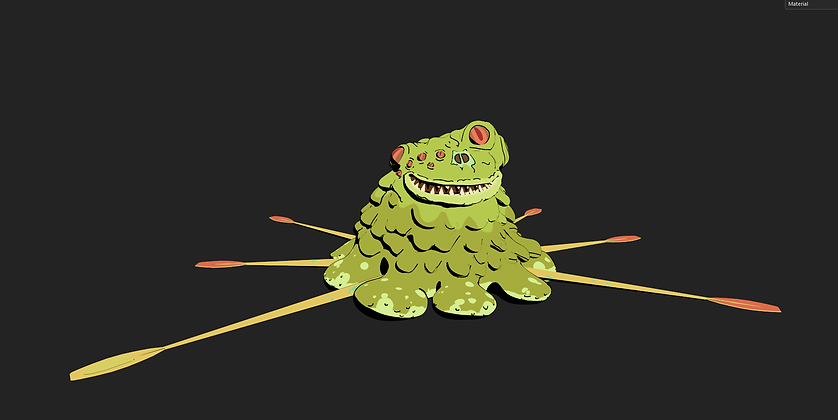

Image (10a)
Below are some of the other props and assets that I worked on. Since a majority of the shader work had already been figured out, it was just a matter of applying the shaders with the right textures to their respective models.

Image (11a)

Image (12a)

Image (13a)

Image (14a)